When "more" was killing the deal
Kiwi.com · Conjoint Analysis · 800+ travellers
The decision on the table
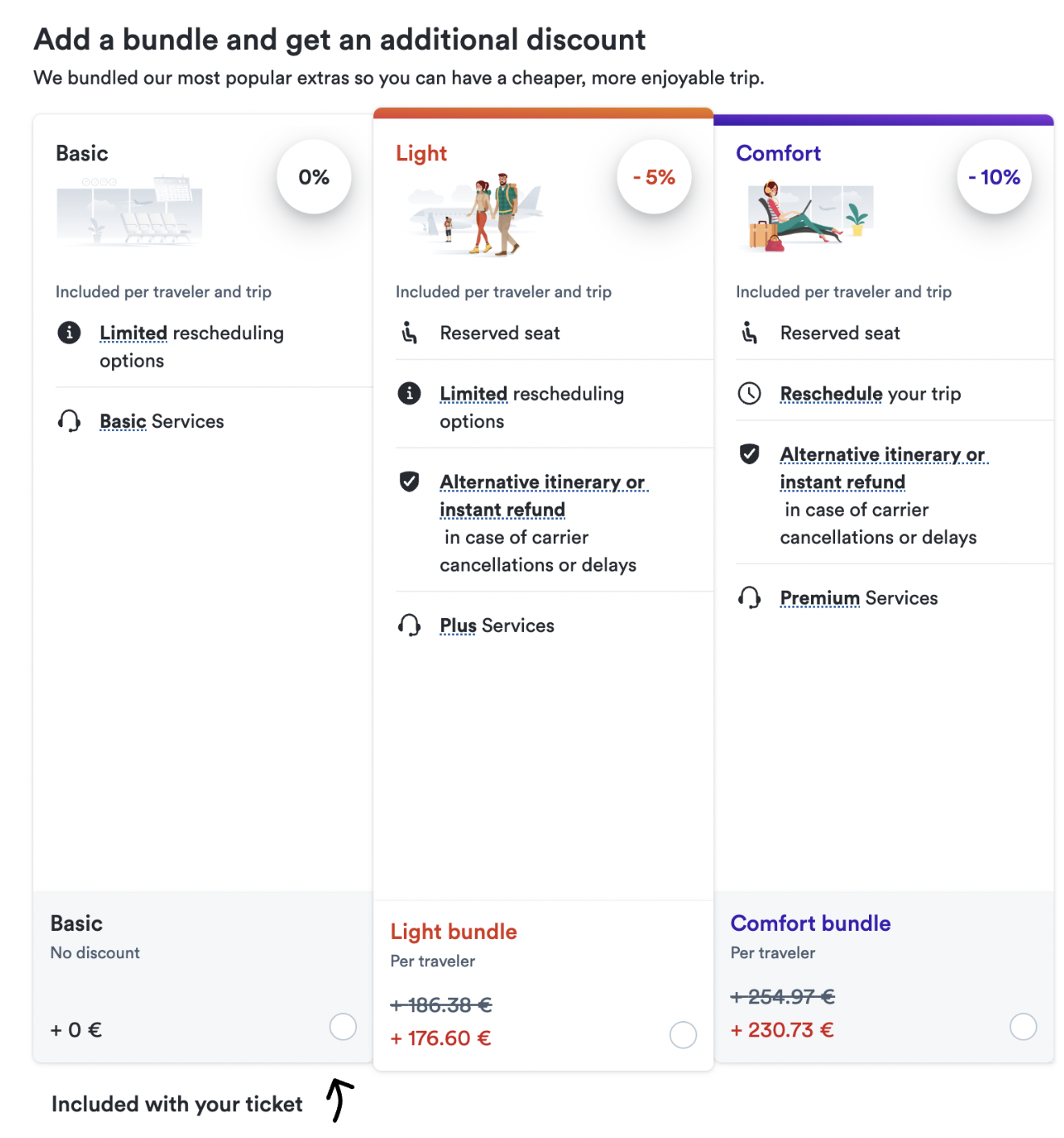
Kiwi.com needed to restructure how they sold ancillary services like seat selection, baggage and cancellation protection to long-haul and family travellers. The assumption driving the existing approach was that bundling more services together would feel like better value. Conversion wasn't reflecting that.
What the research revealed
I ran a conjoint analysis study simulating real booking scenarios with 800+ travellers across two segments. The finding wasn't that travellers didn't want the services because they did. The problem was the price point that appeared once high-value items like checked luggage and cancellation were included in a bundle. At that price, perceived value collapsed, even for items people had just said they wanted.
The opposite was also true: small, inexpensive services bundled together (seat selection, basic customer support) felt like a good deal, even though no individual item in that group ranked as a must-have.
The gap wasn't between what people wanted and what Kiwi was offering. It was between desire and willingness to pay at a specific price threshold and that threshold was invisible without structured preference measurement.
What changed
Kiwi restructured their bundle architecture moving away from large "everything-in" packages toward lighter, flexible combinations that matched what travellers were actually willing to pay for at each price tier.
What this looks like as a Decision Sprint
You're restructuring pricing, packaging, or ancillary bundles and need to know what travellers will actually pay for and not just what they say they want. A conjoint study gives you that within 1–2 weeks.