Bringing the customer into the roadmap
Kiwi.com · MaxDiff + Prioritisation Framework
The decision on the table
Kiwi's product teams were prioritising features based on two inputs: engineering effort and business impact. Customer preference wasn't in the model, which was mainly due to no structured way to measure it quickly enough to fit the roadmap cycle.
What the research revealed
I designed and ran a company-wide research programme to make customer value a measurable, repeatable input to feature prioritisation. Working with product managers and designers across teams, I translated feature backlogs into clear statements real users could respond to, then ran MaxDiff surveys with active Kiwi users to measure relative preference.
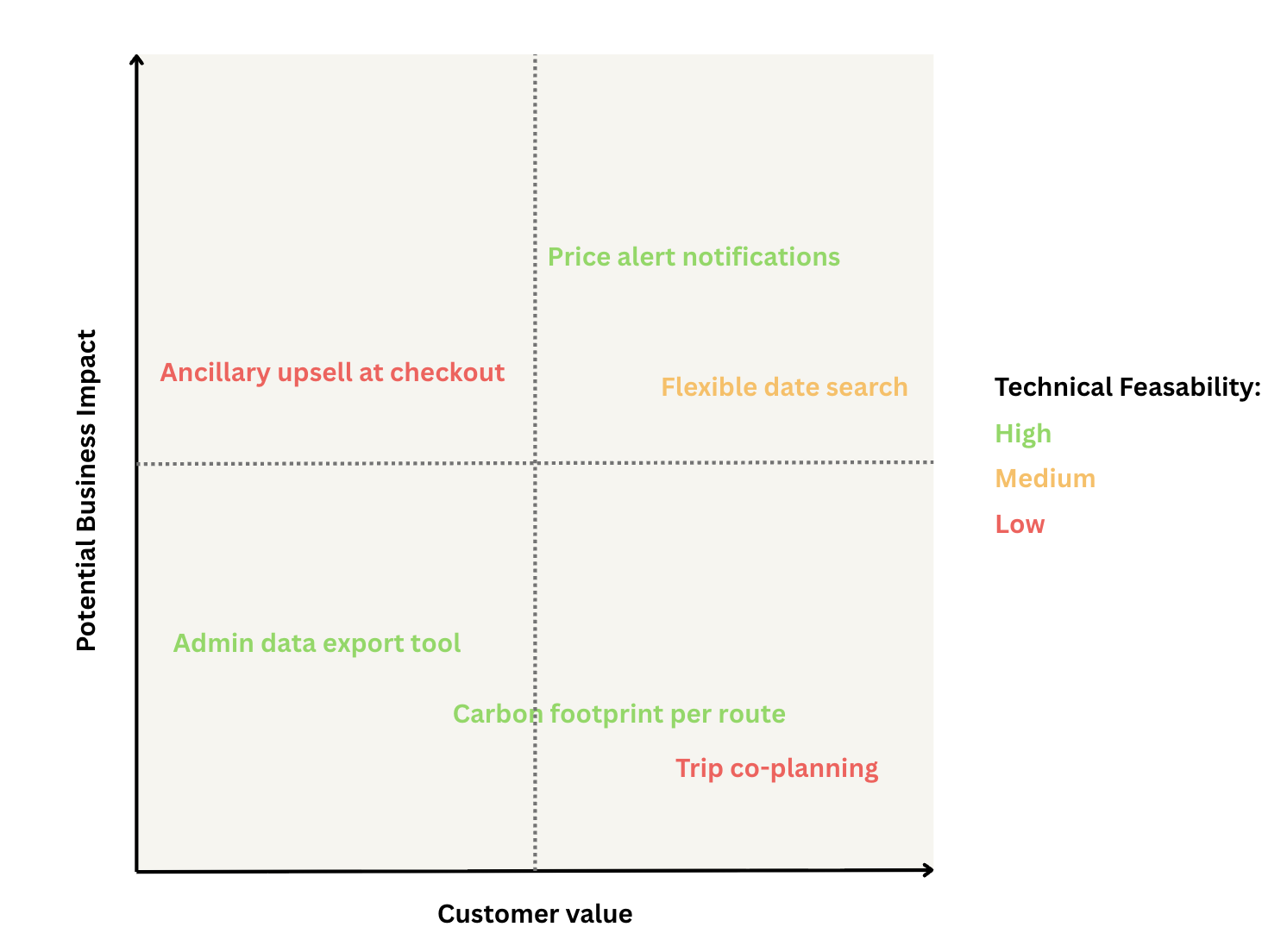
The output was a three-axis prioritisation framework combining feasibility, business impact, and customer value scored per feature, plotted visually, and repeatable by any PM without needing a researcher in the room each time.
What the data surfaced: several features with high internal confidence and reasonable engineering effort scored low on customer value. Without the research layer, those would have been built. Others that had been deprioritised as "nice to have" turned out to have strong customer pull that wasn't reflected in business-impact estimates.
What changed
Teams gained a shared, evidence-backed language for roadmap decisions. Features that had been carried forward on momentum got dropped with confidence. The framework was adopted across product teams and ran repeatedly without adding friction to delivery cycles.
What this looks like as a Decision Sprint
You're heading into a roadmap planning cycle and need to know which features your travellers actually value and not which ones your team assumes they do. A targeted preference survey can give you that before the next planning session.