I thought decision-makers hired researchers to get answers. The data says they hire researchers to survive the room.
The third piece in a series about running a positioning study on my own business. The first article covers the full story and study design. The second covers the framing experiment. This one covers what buyers actually value and why it reframes the whole job.
The toilet in the hallway
If you work in UX research, your LinkedIn feed probably looks a lot like mine. It is full of researchers, which means it is full of a very specific kind of content: posts making the case for research, usually illustrated with a photo of a toilet in a hallway or a door handle you have to lean into at a weird angle.
And I get it! From inside the discipline, the need for user research feels self-evident. How could you build anything without understanding who you're building it for? The design disasters write themselves.
But there’s one thing that we don't talk about enough:
Our direct clients are not our users.
The person who hires a researcher, like a VP of Product who signs the contract, has a problem that is adjacent to, but not the same as, "we don't understand our users." Their problem is more specific, more personal and honestly a bit more stressful. I know this because I spent the last few weeks building a business myself, while discovering that business is a lot more than just customer experience.
Don't get me wrong. I think research is genuinely valuable to almost any organisation. How could I not? But there's a difference between low-impact research and high-impact research and I think it starts with understanding what your stakeholders are actually trying to solve.
So I did what I do. I ran the study.
Value Props Maxxing
This part of the study was an anchored MaxDiff, which, if you're not familiar, is a method for figuring out which things in a list people care most about when you can't just ask them to rate everything highly (which they will, because people are polite and everything sounds nice in isolation).
I gave 89 senior decision-makers a list of 7 reasons someone might hire an external researcher, which I extracted out of open ended questions from a previous study. They were shown sets of 3 and in each set, they had to pick the one that mattered most and the one that mattered least. You do this across enough combinations and the math starts to tell you something real about preferences.
The seven items were:
Rigorous methodology I can defend to stakeholders
Getting a clear recommendation, not just a data dump
Speed: results in days, not months
A researcher who understands my industry context
Confidence that the decision is evidence-based, not gut feel
An outside perspective with no internal agenda or politics
Findings framed for executive or leadership audiences
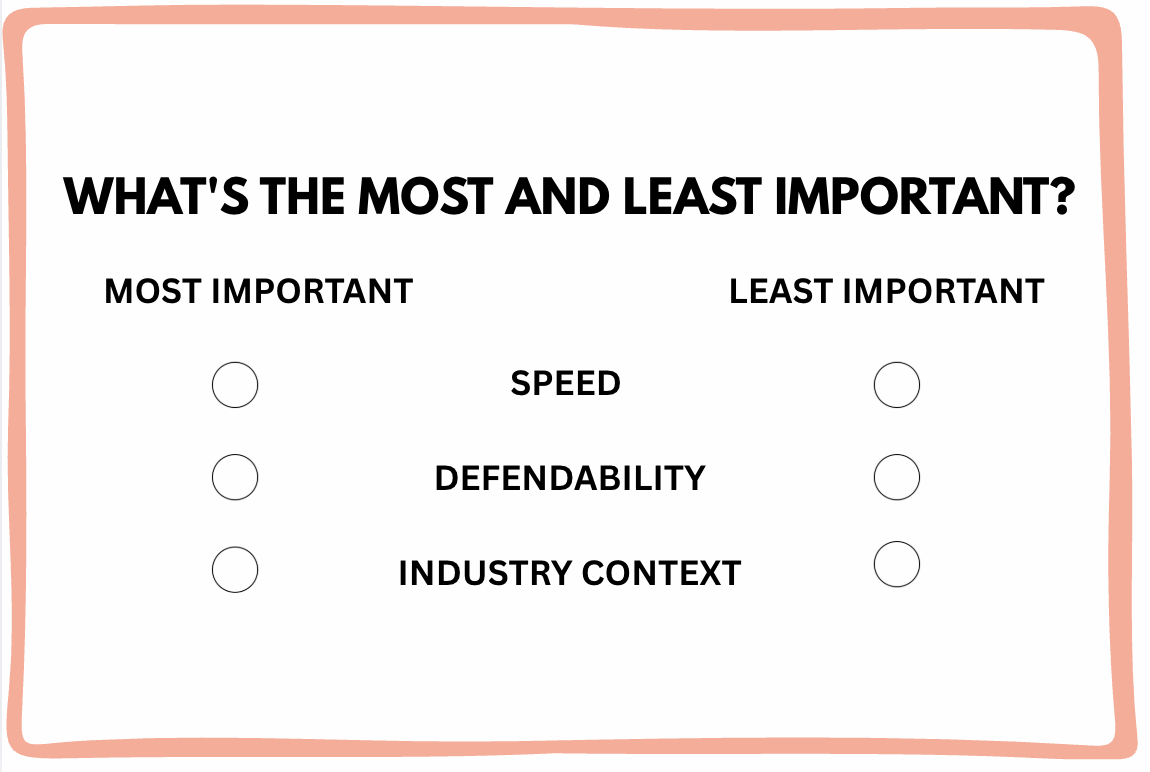
Simplified example of a MaxDiff question
Confidence over speed
The results split cleanly into two groups and the gap between them is bigger than I expected.
The top four all scored positively. They were chosen as most important far more often than least important and between 63% and 78% of respondents called them a genuine requirement: something they truly need and doesn’t just sound nice to have.
The bottom three did the opposite. Speed, executive framing and an outside perspective were more often the things people actively dismissed. Only around 1 in 5 buyers considered speed a genuine requirement.
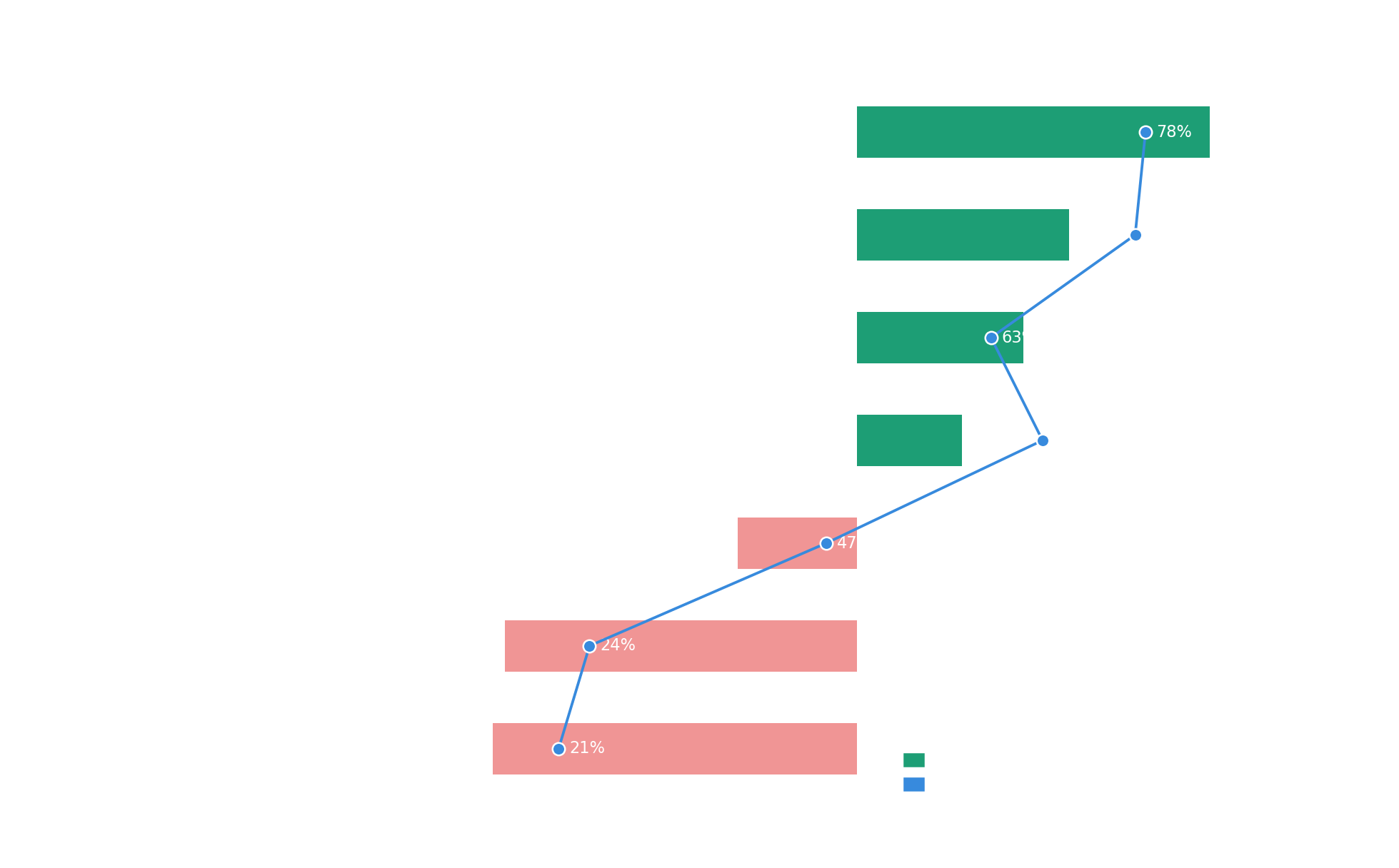
MaxDiff Results of value propositions for 89 decision-makers. Importance score: Positive = more often chosen as most important. Negative = more often chosen as leats important.
What struck me about this list is that all of the top 4 value propositions are expressing a similar concept. The people filling out this survey need to be able to defend a decision in a room full of people more senior than them. The clear output, the evidence base, the rigorous method, the industry credibility, all of it serves that single underlying need.
They are not just hiring a researcher because they don't understand their users. They are hiring a researcher so they can comfortably defend their decisions in front of others.
What I changed for my own business
The most direct implication for my own positioning: I stopped leading with speed.
It had been tempting to frame the "results within one week" timeline as a differentiator but only 1 in 5 buyers considers speed a genuine requirement.
The data says lead with defensibility, clear recommendation and methodology you can stand behind. Those are the things senior decision-makers are actually looking for because those are the things that help them survive the room.
